

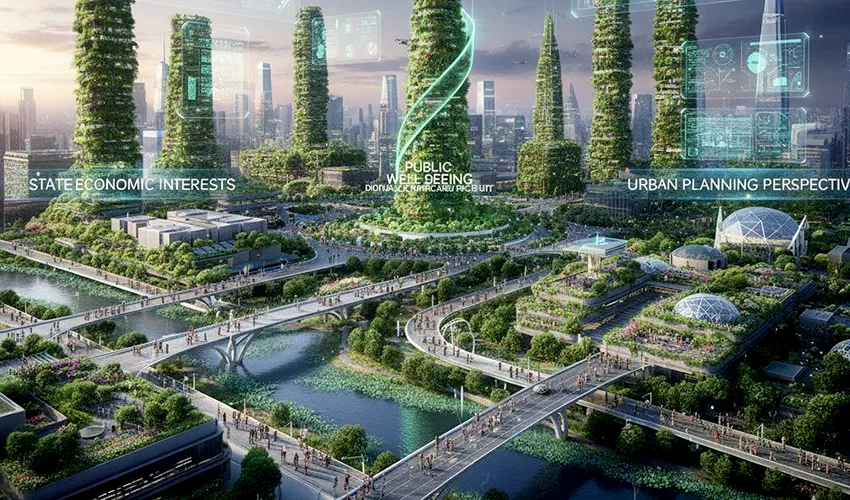
Introduction: a city is not buildings, but a system
One of the most common mistakes in urban planning practice is perceiving a city as merely a collection of buildings. In reality, a city is a complex system of space, economy, society, and governance. The Smart City concept aims to balance these components through modern technologies.
In recent years, Central Asian countries have shown growing interest in large-scale smart city projects. However, from a professional urban planning standpoint, their success depends not on technology itself, but on a sound planning philosophy and governance design.
1. The urban planning essence of smart cities
From a professional urbanist perspective, a smart city must fulfill three core functions:
1. Spatially addressing the needs of residents
2. Creating an efficient environment for economic activity
3. Reducing the burden on public governance
Smartness is not defined by the number of sensors or cameras, but by: logical functional zoning, balance between transport and employment locations, walkable or short-distance access to services.
If the urban structure is flawed, even the most advanced technology will fail.
2. Public comfort through urban planning mechanisms
2.1. Time and space efficiency
In a well-planned smart city, residential, work, education, healthcare, and leisure zones are closely integrated.
This: reduces transport demand, simplifies daily mobility, directly improves quality of life.
The greatest benefit for residents is less travel, less stress, and more productive time.
2.2. Social equity and inclusiveness
A smart city must serve all social groups, not only high-income segments.
This can be achieved through: affordable housing areas, public transport-oriented development, balanced distribution of social infrastructure.
Such planning reduces social segregation within cities.
3. Economic and governance advantages for the state
3.1. Optimization of infrastructure costs
Uncontrolled urban sprawl is one of the most expensive planning mistakes. Smart cities: manage density efficiently, shorten utility networks, reduce operational costs.
As a result, governments can provide higher-quality services to more residents with fewer resources.
3.2. Spatial management of economic activity
Designated zones for industry, logistics, finance, and innovation: concentrate business activity, improve tax revenue forecasting, make economic development more manageable.
3.3. Reduction of governance burden
Proper spatial planning leads to: fewer transport issues, lower social tensions, reduced need for crisis management.
This strengthens political stability and allows governments to focus on long-term strategic planning.
Conclusion
From an urban planning perspective, large-scale smart city projects provide: residents with a safe, comfortable, and sustainable living environment, governments with a manageable economy and a resilient urban system.